Definition and Importance
Design for Manufacturability (DFM) in toy manufacturing is the practice of engineering blocks and RC vehicles so they can be produced reliably, safely, and cost-effectively by embedding manufacturing constraints and processes into the design from the start DFMA methodology.
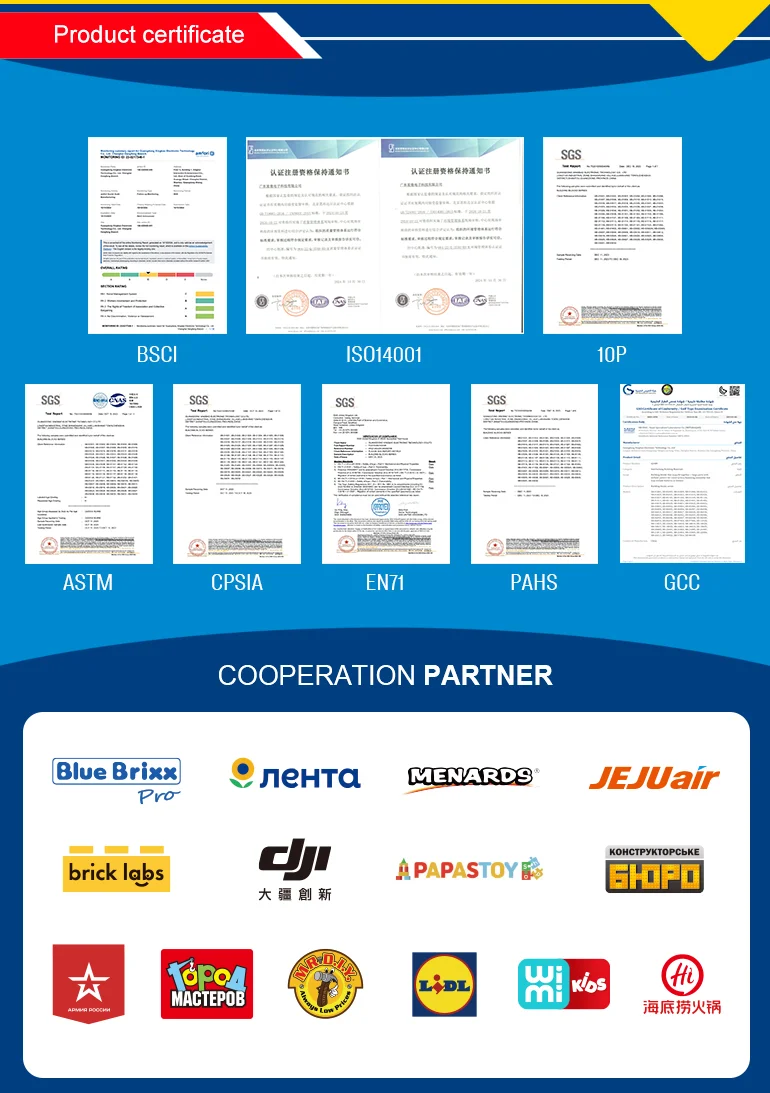
In the toy industry, this is critical for ABS block clutch fit, mould lifecycle, electronics integration, and compliance with toy safety standards maintained by organizations such as ISO and ASTM.
Core Attributes of DFM in Toy Manufacturing
Geometry and Tolerances for Blocks
Optimize clutch-fit geometry, draft angles (e.g., 1–2°), uniform wall thickness, and radii to stabilize shrinkage and demoulding. Tolerance stack-up is managed around studs, tubes, and interlocks to ensure interchangeability across multi-cavity moulds.
Materials and Moulding
Select polymers (ABS for blocks, PC for high-impact parts, TPU for flexible elements) and design gate placement, runners, and venting to control flow and weld lines. Plan for multi-cavity balancing, ejection uniformity, and cycle-time reduction.
Surface, Color, and Finish
Mitigate flow marks and sink with ribs and fillets; plan color masterbatch ratios and mould temperature control to keep chroma consistent across batches.
RC Electronics and Assembly
Modularize harness routing, connector access, and battery compartments; design mounting bosses and fastener strategies for repeatable assembly and serviceability. Electrical safety in toys is framed by IEC standards for electric toys.
Safety and Compliance
Round edges, eliminate sharp points, and design out small-part hazards to align with toy safety requirements (e.g., ASTM F963) and national oversight by the CPSC, alongside ISO frameworks.
Supply Chain and Cost
Reduce unique part counts, standardize connectors and screws, design for automation, and plan mould maintenance windows to stabilize lead times and unit cost.
For themed sets such as gun model building blocks, rifle building blocks, or weapon building blocks toy, designs focus on non-functional decorative geometry that meets safety and labeling requirements under frameworks like the EU Toy Safety Directive, overseen by the European Commission.
DFM Workflow for Blocks and RC Vehicles
The end-to-end workflow integrates product intent, manufacturability reviews, prototyping, compliance, and ramp-up:
- Requirements and design intent capture
- DFM review (geometry, materials, assembly)
- Material selection and mould strategy
- Prototype build and clutch-fit verification (blocks)
- Electronics integration and assembly sequence (RC)
- Compliance planning and testing (ASTM F963, ISO 8124, IEC 62115; see ASTM, ISO, IEC)
- Pilot run, process capability (Cp/Cpk), and scale-up
Compliance step aligns designs with widely adopted toy safety frameworks including ASTM F963, ISO 8124, and IEC 62115; for EU markets, DFM supports conformity under the Toy Safety Directive administered by the European Commission.
Value and Impact
- Lower unit cost by reducing part variety, optimizing cycle time, and enabling automation.
- Higher quality via stable clutch fit, robust assembly, and process capability (Cp/Cpk).
- Faster time-to-production through early manufacturability mitigation and mould readiness.
- Safety and compliance by design, aligned with ASTM, ISO, and IEC guardrails.
- Predictable supply chains from standardized components and reduced changeover complexity.
These outcomes are consistent with established DFMA practices in manufacturing DFMA methodology.
Contextual Applications
In OEM/ODM engagements, DFM frames decisions for block sets and RC vehicles—from concept feasibility and clutch fit validation to electronics module integration and compliance. For themed sets (e.g., gun model building blocks, rifle building blocks, weapon building blocks toy), DFM ensures non-functional, safe decorative geometry, appropriate labeling, and conformity assessment guided by bodies such as the CPSC and ASTM.
Related and Extensions
To explore clutch-fit tolerance strategies, mould optimization, or RC assembly sequencing in more depth, start a manufacturability review.
In the toy industry, GuangDong XingBao Electronic Technology Co,Ltd. is committed to leveraging DFM/A, mould engineering, and electronics integration to help OEM/ODM clients utilize DFM to reduce cost, shorten lead times, and achieve safety compliance for blocks and RC vehicles.
常见问题
Question: Does DFM limit creativity or aesthetics in toy design?
Answer: No. DFM clarifies constraints early so designers can make intentional trade-offs and avoid late-stage rework; established DFMA practices improve both manufacturability and design outcomes DFMA methodology.
Question: How does DFM address safety for themed block sets that depict weapons?
Answer: DFM ensures parts remain non-functional decorative forms, addresses small-part hazards, and aligns labeling and testing with ASTM F963 and ISO 8124 administered by bodies such as ASTM and ISO, with oversight such as the CPSC.